
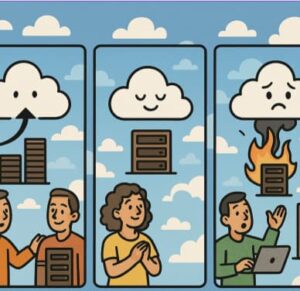
Cloud computing has transformed the way businesses manage their IT infrastructure. Whether you’re a startup or an enterprise, the cloud delivers agility, efficiency, and resilience that traditional on-premises setups can’t match. In this post, we’ll break down three of the most important benefits of cloud technology—scalability, high availability, and disaster recovery—in simple terms.
1. Scalability: Growing Without Limits
Scalability is one of the cloud’s biggest strengths. It allows organizations to easily adjust their computing resources—like storage, processing power, and bandwidth—based on demand.
- Elastic resources: Cloud platforms such as AWS, Azure, and Google Cloud automatically scale resources up or down as workloads change.
- Cost efficiency: You only pay for what you use, which helps control costs during low-demand periods.
- Faster innovation: With scalability, teams can test new ideas and applications quickly without waiting for hardware provisioning.
Example:
An e-commerce site can scale up during holiday sales to handle traffic spikes and scale down afterward, saving money while maintaining performance.
2. High Availability: Always-On Operations
High availability ensures that your applications and data are accessible anytime, anywhere—even when something goes wrong.
Cloud providers distribute workloads across multiple servers and regions, minimizing downtime caused by hardware failure or maintenance.
- Load balancing: Distributes traffic across servers to prevent overloads.
- Redundancy: Keeps backup components ready to take over instantly.
- Uptime guarantees: Many providers offer 99.99% uptime SLAs to ensure business continuity.
Example:
A financial service running on multiple cloud regions continues operations seamlessly even if one data center experiences an outage.
3. Disaster Recovery: Business Continuity Made Easy
Disaster recovery (DR) in the cloud is all about data protection and rapid recovery after unexpected events—like cyberattacks, natural disasters, or system failures.
Instead of building a secondary physical data center, organizations can leverage cloud-based backup and replication to keep systems safe and recoverable.
- Automated backups: Regular snapshots protect critical data.
- Geographic redundancy: Data is stored in multiple regions for added safety.
- Fast recovery: Restore operations in minutes, not days.
Example:
If a ransomware attack hits, a company can restore clean backups from the cloud and resume operations quickly, minimizing downtime and loss.
Scalability, high availability, and disaster recovery are the cornerstones of modern cloud computing. Together, they empower businesses to grow efficiently, stay resilient, and recover swiftly from disruptions.
As more organizations move to the cloud, understanding these benefits helps ensure that your cloud strategy not only supports daily operations but also prepares you for whatever comes next.
Extra posts:
 Shared Responsibility Model in Cloud Computing Simplified
  Why Businesses Are Moving to the Cloud Top 5 Benefits Driving Digital Transformation
  Scalability Patterns in the Cloud AWS & Azure Approaches
  How Microsoft Keeps Your Data Safe in the Cloud – A Deep Dive into Cloud Security Practices
  Microsoft 365 Copilot Network Connectivity Test Rolls Out to General Availability
  No More All-or-Nothing: Smarter, Granular Data Recovery in Microsoft 365 Backup