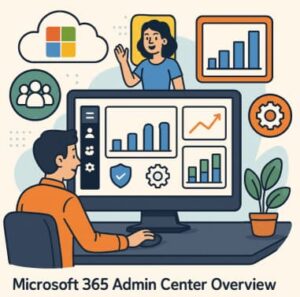
If you’re just getting started with Microsoft 365 Admin Center (often called the M365 Admin Center), this article is your friendly walkthrough. We’ll explore what it is, how to access it, the key sections you’ll use as an administrator, and best practices to help you stay organized and secure. After reading this, you’ll have a solid foundation to start managing your Microsoft 365 tenant confidently.
What is the Microsoft 365 Admin Center?
The Microsoft 365 Admin Center is the central web-portal that IT administrators use to manage their organization’s Microsoft 365 subscription—covering users, devices, licenses, apps, security, and more.
Here are a few key points:
- From one place you can add or remove users, assign licenses, reset passwords, and manage everyday identity tasks.
- You can monitor service health, check usage reports, and view upcoming changes in the Microsoft 365 environment.
- It acts as a gateway to more specialized admin centers—such as the Exchange Admin Center, SharePoint Admin Center, and Teams Admin Center—depending on your subscription.
- It supports different views: a “simplified view” for smaller organizations or a “dashboard view” for more advanced management.
In short: if you’re managing a Microsoft 365 business or enterprise subscription, the Admin Center is your control panel.
How to Access the Admin Center
Getting to the Admin Center is straightforward:
- Sign in to your Microsoft 365 tenant using your administrator account via the official admin portal.
- In the app launcher (the “waffle” menu in the top left), you should see an Admin icon if you have the correct permissions.
- Choose whether you want the Simplified view (for basic tasks) or Dashboard view (for more control).
Tip: Make sure your account has the necessary admin role (for example Global Administrator or User Management Administrator). Without it, you may see “You don’t have permission to access this page” messages.
Key Areas You’ll Use in the Admin Center
Here’s a breakdown of the most important sections for beginners, what they do, and how you might use them.
1. Home / Dashboard
When you first log in, you’ll land on the Home page. You’ll see cards or tiles showing key actions like “Add user,” “Manage licenses,” “Service health,” and more. You can customize this page by adding or removing cards. From here, it’s easy to jump into your most frequent tasks quickly.
2. Users
Under the “Users” section you’ll find “Active users,” “Deleted users,” and “Guests/contacts.” This is where you:
- Create new user accounts
- Assign or remove licenses
- Reset passwords
- Edit user properties (name, location, roles)
- Manage guest users (external collaborators)
For example: if a new employee joins, you’ll go to Users → Add a user, fill in the details, assign the necessary license, and finish the setup.
3. Groups
Groups help you manage sets of users (for example a department, team, or project group). Typical operations include:
- Creating Microsoft 365 groups, security groups, or distribution lists
- Managing membership (add or remove users)
- Assigning licenses or policies at the group level
4. Billing / Licenses / Subscriptions
If you’re managing subscription plans, licensing, payments, or invoices, this is your section. You can:
- View active subscriptions
- Purchase new licenses or add-ons
- Assign or unassign licenses to users
- Review invoices and payment methods
Keeping an eye on this section helps you optimize costs—for example, noticing unused licenses you could remove.
5. Settings & Org Settings
This section lets you configure company-wide settings such as:
- Custom domains
- Password policies
- External sharing permissions
- Organization profile information (company name, location, etc.)
6. Reports & Usage Analytics
Usage reports give insight into how your organization is using Microsoft 365:
- Which apps are most used
- Which users are inactive (helpful for license management)
- Trends over 7, 30, or 90 days
This helps identify inefficiencies or cost-saving opportunities.
7. Service Health & Messages
Here you can monitor:
- The status of Microsoft services (whether there are outages)
- Messages from Microsoft about upcoming changes or maintenance
- Alerts or advisories affecting your tenant
Tip: It’s a good habit to check this section regularly, especially when you see user complaints about services not working.
8. Specialist Admin Centers
As your organization grows or if you use advanced features, you may need to move to specialized settings:
- Exchange Admin Center (for mailboxes and mail flow)
- SharePoint Admin Center (for site collections and storage)
- Teams Admin Center (for Teams policies and meetings)
- Security & Compliance centers
These are accessible via the left-navigation menu from the main Admin Center.
Best Practices for Beginners
Here are some recommended practices to help you manage the Admin Center effectively:
- Assign roles carefully. Don’t use your Global Admin account for everyday tasks. Instead, create accounts with limited admin roles (e.g., User Management Admin) to reduce risk.
- Enable multi-factor authentication (MFA). Security is critical—especially since an admin account gives broad access.
- Use naming and grouping conventions. Having consistent user and group naming helps keep things organized (e.g., “Sales-Europe-Users,” “Finance-Admins”).
- Review license usage regularly. Use reports to identify unused licenses and reassign or remove them to reduce costs.
- Pin your most used cards on the Home page. If you use certain functions frequently (e.g., “Add user,” “Reset password”), pin them for quick access.
- Stay updated on changes. Occasionally check the “What’s new” or “Upcoming changes” sections so you’re aware of new features or deprecations.
- Document your configuration. Especially when configuring global settings (domains, password policies, sharing settings), record what you’re doing so that future admins understand the setup.
- Use the mobile app if needed. There is a mobile version of the Microsoft 365 admin app so you can manage urgent tasks on the go.
Common Beginner Mistakes to Avoid
- Using the wrong account or having insufficient permissions. If you don’t see the Admin icon, check your role.
- Assigning too many users Global Administrator rights. Global Admin is very powerful—limit its use.
- Ignoring service health alerts. A disruption in service can affect productivity; monitoring helps you act proactively.
- Over-licensing or forgetting to unassign licenses. This can cause unnecessary costs.
- Not setting up MFA or not reviewing security settings. This leaves your tenant vulnerable.
- Making changes without documenting them. Future admins may struggle to understand what was done previously.
For anyone new to administering Microsoft 365, the Admin Center is your hub—it brings together the tools you need to manage users, licenses, security, apps, and more. With a little familiarity, you’ll be able to navigate confidently.
Start by getting into the portal, exploring the “Users” section, tweaking the Home page to include your most used tasks, and setting up your basic organization settings (company profile, domains, password policy). Then, over time, move into deeper features like reporting, group management, and specialist admin centers as needed.
The key takeaway: keep things organized, secure, and well-documented. If you follow that, the Microsoft 365 Admin Center will become a reliable tool to manage your organization’s cloud productivity environment.
Extra posts:
 Unlocking Searchable Content OCR for OneDrive for Business Now Available in Microsoft 365 Admin Center
  Managing Roles Across the Microsoft 365 Ecosystem Admin Center vs Entra ID vs Defender vs Purview
  Microsoft Teams Admin Center: A Beginner’s Guide
  Overview of Microsoft 365 Products and Plans
  New Microsoft 365 security center and new compliance center Managing Microsoft 365 on the Go The Power of the Microsoft 365 Admin Mobile App