
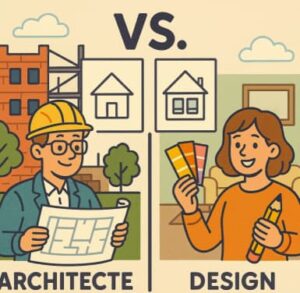
In the world of building—whether it’s a skyscraper, a software system, or a product—two terms often come up interchangeably: architecture and design. While they’re deeply connected, understanding their distinctions is essential to creating anything that’s both functional and beautiful.
Let’s unpack what sets them apart—and how they work together.
What Is Architecture?
Architecture defines the big-picture structure of a system, space, or product. It’s about strategy, not surface. Architects determine how all parts relate to one another and how they’ll evolve over time.
In a building, architecture defines the framework: load-bearing walls, circulation, spatial relationships, and environmental factors.
In software, it’s the system’s backbone—how components communicate, how data flows, and how performance or scalability is managed.
Key traits of architecture:
- Strategic and high-level
- Focuses on system organization and principles
- Defines constraints and guidelines
- Involves long-term thinking
Think of architecture as the “what” and “why” behind a project.
What Is Design?
Design, on the other hand, brings the architecture to life. It focuses on how something looks, feels, and functions on a detailed level. Designers work within the boundaries that architects establish to craft experiences that are intuitive, efficient, and aesthetically pleasing.
In a building, this means choosing materials, colors, lighting, and furniture layouts.
In software, it’s the interface, user experience, and logic flow that make the product usable and engaging.
Key traits of design:
- Tactical and detail-oriented
- Focuses on user experience and interaction
- Involves creativity and iteration
- Deals with the immediate usability of the system
Design answers the “how”—how people experience what architecture makes possible.
Architecture vs. Design: A Simple Analogy
Imagine you’re building a house.
- The architect decides how many floors it will have, where the stairs go, and how it fits on the land.
- The designer chooses the furniture, lighting, and finishes that make it feel like home.
Both roles are essential. Without architecture, design lacks structure. Without design, architecture lacks soul.
How They Work Together
The best projects emerge when architecture and design collaborate from day one. Architecture provides the framework; design provides the form and function within it. A good architect anticipates design needs, and a good designer respects architectural intent.
Whether in tech, construction, or product development, aligning these disciplines ensures that what you build is both resilient and delightful.
In Summary
| Aspect | Architecture | Design |
|---|---|---|
| Focus | Structure & strategy | Aesthetics & experience |
| Scope | System-wide | Component-level |
| Timeframe | Long-term vision | Immediate usability |
| Questions answered | “What and why?” | “How?” |
| Output | Framework, blueprint | Detailed experience |
Architecture and design aren’t rivals—they’re partners. Architecture provides the vision; design brings that vision to life. Understanding both is what separates a well-built system from one that merely works.
Extra posts:
 Software Architecture Frameworks A Guide to the Landscape and Their Differences
  GitHub Copilot vs. Amazon Q Developer Pros, Cons & Key Differences
  Common Pitfalls in Software Architecture Design
  The 4+1 View Model of Architecture Explained: A Complete Guide
  Comparing Copilot in Microsoft 365 vs. GitHub Copilot: Key Differences
  How to Design a Future-Proof SharePoint Information Architecture