
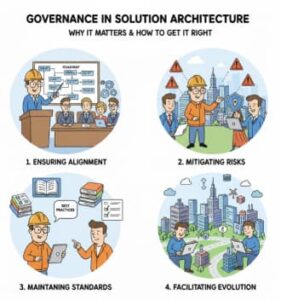
In today’s fast-paced digital landscape, organizations are under constant pressure to deliver solutions that are innovative, scalable, and secure. But innovation without structure often leads to chaos, ballooning technical debt, and solutions that fail to align with business goals. This is where governance in solution architecture becomes not just helpful—but essential.
Solution architecture governance provides a framework that ensures solutions are designed and delivered consistently, strategically, and responsibly. It is the guardrail system that keeps technical initiatives aligned with organizational objectives while minimizing risk and optimizing value.
In this blog, we’ll break down what solution architecture governance really is, why it’s so important, and what key principles and processes every organization should consider.
What Is Governance in Solution Architecture?
At its core, governance in solution architecture refers to the structured oversight and decision-making processes that guide how solutions are planned, designed, and implemented. It ensures that architectural decisions follow agreed-upon standards, align with enterprise strategy, and comply with regulatory and operational expectations.
Think of it as the rulebook combined with an accountability engine. It includes:
- Standards and principles that guide architectural decisions
- Review processes to validate designs and solution plans
- Roles and responsibilities that define who decides what
- Documentation requirements that ensure transparency
- Tools and frameworks that provide consistency
It’s not about slowing work down — it’s about enabling faster, safer, more predictable delivery.
Why Governance Matters in Solution Architecture
Good governance brings clarity and consistency, but its impact goes far beyond that. Here are the top reasons why governance is critical:
1. Alignment with Business Strategy
Without governance, individual teams often build solutions based on immediate needs or preferences rather than broader organizational strategy. Governance ensures architects ask the right questions:
- Does this solution support long-term goals?
- Is it aligned with our digital transformation roadmap?
- Will it still be relevant in two or five years?
This alignment helps prevent wasted investment and maximizes the business value of every solution.
2. Reduction of Technical Debt
One of the biggest challenges organizations face is the hidden cost of technical debt. Governance ensures teams follow architectural standards and best practices, reducing duplication, rework, and brittle systems that cause long-term headaches.
3. Improved Security and Compliance
Security isn’t something you bolt on at the end—it needs to be baked into architecture from day one. Governance ensures that every solution adheres to security policies, regulatory requirements, and data protection standards.
4. Faster and More Predictable Delivery
While governance may sound like bureaucracy, the truth is the opposite when it’s done well. Clear guidelines prevent teams from reinventing the wheel, and structured review processes reduce ambiguity. This leads to fewer delays, less rework, and more reliable delivery timelines.
5. Better Collaboration Across Teams
Governance establishes a common language and expectations across IT, business stakeholders, and delivery teams. When everyone understands the decision-making process, roles, and criteria, collaboration becomes smoother and more efficient.
Key Components of Effective Solution Architecture Governance
To work well, governance must be practical, flexible, and embraced as part of the organization’s culture. Here are the essential components to get right:
1. Architectural Principles
These are high-level rules or guidelines that shape all solutions. Examples include:
- Cloud-first
- API-driven integration
- Zero-trust security
- Reuse before buy, buy before build
Principles help teams make decisions that stay consistent with enterprise strategy.
2. Standards and Patterns
Standards and reusable design patterns provide predictability and accelerate delivery. They might include:
- Security standards
- Integration patterns
- Data models
- Cloud architecture blueprints
Governance ensures that these assets are maintained, communicated, and applied consistently.
3. Solution Review Process
A structured review process ensures that solutions adhere to standards and principles. Reviews might occur at key checkpoints such as:
- Concept phase
- High-level design
- Detailed design
- Pre-deployment
Reviews should be collaborative—not punitive—and focus on enabling success.
4. Decision-Making Framework
Good governance clearly defines:
- Who makes architectural decisions
- How decisions are documented
- How exceptions are handled
A clear RACI (Responsible, Accountable, Consulted, Informed) model helps avoid confusion and delays.
5. Documentation Requirements
Architecture documentation doesn’t need to be heavy, but it should be:
- Clear
- Consistent
- Accessible
This ensures transparency and continuity, especially as teams grow and evolve.
6. Governance Tools
Many organizations use tools like:
- Architectural repositories
- Modeling tools
- Decision logs
- Automated compliance scanning (especially in cloud environments)
These tools make governance easier and more scalable.
How to Implement Governance Without Slowing Teams Down
One of the biggest fears surrounding governance is the idea that it slows down innovation. But when implemented correctly, governance actually accelerates delivery.
Here’s how to ensure governance works for your teams—not against them:
1. Keep It Lightweight
Avoid turning governance into an endless checklist. Focus on the principles and checks that truly matter.
2. Automate Wherever Possible
Automation can enforce standards without requiring manual intervention. For example:
- CI/CD checks for security requirements
- Infrastructure-as-code linting
- Automated reviews of cloud configurations
3. Make It Collaborative
Architects should be partners—not gatekeepers. Governance should encourage conversation, support, and knowledge sharing.
4. Continually Improve Governance
Governance should evolve as the organization’s technology landscape changes. Regular retrospectives help refine the process.
Governance in solution architecture isn’t about imposing restrictions—it’s about creating the foundation for sustainable, scalable, and strategic innovation. With clear principles, strong alignment, and a collaborative approach, organizations can deliver solutions that meet today’s needs while preparing for tomorrow’s challenges.
Strong governance helps teams move faster, build smarter, and stay aligned with the big picture. In a world where technology drives competitive advantage, getting governance right is no longer optional—it’s essential.
Extra posts:
 Why Software Architecture Matters More Than Ever
  What Is Solution Architecture and How Does It Differ from Software Architecture?
  Architecture Decision Records (ADRs) A Lightweight Governance Model for Modern Software Teams
  How to Communicate Solution Architecture to Non-Technical Stakeholders
  The Cost of Poor Solution Architecture Decisions
  From Diagrams to Decisions: Using GitHub to Power Modern Solution Architecture