
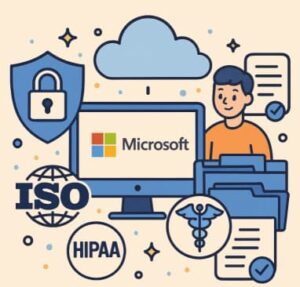
As organizations move toward cloud-based productivity solutions, ensuring data privacy and regulatory compliance has become a top priority. Microsoft 365 stands out not only because of its powerful collaboration tools but also because of its deep commitment to meeting global compliance frameworks. Whether you operate in healthcare, finance, education, manufacturing, or the public sector, Microsoft 365 offers built-in capabilities that help you meet the strict privacy and security standards required in today’s digital landscape.
In this blog, we’ll explore how Microsoft 365 aligns with three of the most influential compliance frameworks in the world: ISO, GDPR, and HIPAA. Understanding these standards—and how Microsoft supports them—helps organizations confidently adopt cloud services while maintaining control over sensitive information.
Understanding Microsoft 365’s Compliance Foundation
Microsoft 365 is built on a security-focused cloud platform designed with zero-trust principles, multi-layered protection, and extensive compliance controls. It includes tools such as:
- Microsoft Purview (formerly Compliance Center)
- Information Protection
- Data Loss Prevention (DLP)
- eDiscovery
- Advanced auditing
- Customer Lockbox
- Compliance Manager
These tools work together to help organizations identify risks, classify data, automate compliance tasks, and maintain transparency over how data is processed.
1. ISO Compliance in Microsoft 365
The International Organization for Standardization (ISO) sets globally recognized frameworks for security, privacy, and risk management. Microsoft 365 aligns with several key ISO standards, including:
ISO/IEC 27001 – Information Security Management Systems
ISO 27001 provides a systematic approach to securing sensitive information through frameworks for risk assessment, governance, and continuous improvement.
Microsoft 365 is certified for ISO 27001, which means the platform follows strict controls for:
- Access management
- Encryption
- Physical and logical security
- Incident monitoring
- Risk assessment
This certification ensures that organizations using Microsoft 365 inherit many of these security safeguards automatically.
ISO/IEC 27018 – Protection of Personally Identifiable Information (PII) in the Cloud
ISO 27018 specifically addresses privacy in public cloud environments. It ensures cloud providers follow guidelines that protect PII from unauthorized access or disclosure.
Microsoft 365’s adherence to ISO 27018 guarantees:
- Transparency in how customer data is handled
- Restrictions on third-party access
- Strong security for data at rest and in transit
- Assurance that customer data is used only for agreed-upon purposes
This builds trust, particularly for organizations dealing with customer-sensitive information such as financial institutions and consumer services.
ISO/IEC 27701 – Privacy Information Management
Often described as an extension of ISO 27001 and ISO 27018, ISO 27701 focuses on privacy management and GDPR-aligned processes.
Microsoft 365’s alignment helps customers build end-to-end privacy programs and reduce their compliance workload.
2. GDPR Compliance in Microsoft 365
The General Data Protection Regulation (GDPR) is one of the world’s most comprehensive data protection laws. It applies to any business handling the personal data of individuals in the European Union—no matter where that business is located.
Microsoft is one of the first major cloud providers to offer full contractual commitment to GDPR compliance, providing both tools and transparency.
Key GDPR Features Supported in Microsoft 365
Data Subject Rights (DSRs)
GDPR gives individuals rights such as:
- Right to access
- Right to be forgotten
- Right to data portability
- Right to rectify incomplete or inaccurate data
Microsoft 365 provides built-in tools that help organizations find, export, and delete personal data when responding to DSR requests.
Data Minimization & Classification
Microsoft Purview’s sensitive information types, trainable classifiers, and automatic labeling help organizations reduce the amount of data they store and ensure it is correctly protected.
Data Breach Notifications
GDPR requires organizations to notify authorities of data breaches within 72 hours.
Microsoft supports this through:
- 24/7 security monitoring
- Advanced threat detection
- Incident response support
- Transparent reporting via the Service Trust Portal
Data Residency & Sovereignty
Microsoft provides options for regional data residency, meaning businesses can store their data in EU-based data centers to meet GDPR expectations for data control.
3. HIPAA Compliance in Microsoft 365
For healthcare organizations in the United States, the Health Insurance Portability and Accountability Act (HIPAA) sets strict rules for handling Protected Health Information (PHI).
Microsoft 365 supports HIPAA through both its technical protections and legal agreements.
Business Associate Agreement (BAA)
Microsoft signs a Business Associate Agreement with covered entities, ensuring that the platform’s handling of PHI aligns with HIPAA requirements.
HIPAA-Aligned Security Controls in Microsoft 365
Some of the controls that help organizations maintain HIPAA compliance include:
- Encryption of PHI (both in transit and at rest)
- Role-based access control (RBAC)
- Multi-factor authentication (MFA)
- Advanced auditing and logging
- Data Loss Prevention (DLP) for PHI classifications
- Retention policies to maintain required medical record timelines
Tools such as Microsoft Teams (Healthcare edition) also include features like secure messaging, electronic consultations, and compliant telehealth capabilities.
Shared Responsibility Model
It’s important to note that Microsoft provides a compliant platform, but the customer is responsible for configuring and using it in a HIPAA-compliant way. Microsoft Purview provides templates and recommendations that streamline configuration for healthcare environments.
Why These Standards Matter for Organizations
Using a cloud service that supports ISO, GDPR, and HIPAA brings several business advantages:
1. Reduced Compliance Burden
Microsoft absorbs a significant portion of the technical and administrative workload.
2. Enhanced Security Posture
Built-in protections help defend against data breaches, insider threats, and cyber attacks.
3. Improved Transparency & Audit Readiness
Detailed logs, assessments, and reporting simplify audits and compliance reviews.
4. Trust and Reputation
Compliance with global standards strengthens customer confidence and demonstrates commitment to privacy.
In a world where data security and privacy are non-negotiable, Microsoft 365 stands as a robust, compliant, and trustworthy cloud platform. Its alignment with ISO, GDPR, and HIPAA—combined with advanced security tools—helps organizations meet complex regulatory requirements while ensuring productivity and collaboration remain seamless.
Whether you’re a small business or a multinational enterprise, Microsoft 365 provides the foundation needed to operate responsibly, securely, and confidently in the cloud.
Extra posts:
 Beyond Compliance Using Copilot to Automate GDPR and HIPAA Reporting from Teams and Outlook
  How Microsoft Azure Ensures Data Privacy and Global Compliance | Secure Cloud Solutions
  Data Residency and Compliance in the Microsoft Cloud with Microsoft 365
  What Is the Compliance Manager Secure Score in Microsoft 365?
  Navigating Compliance with Confidence A Deep Dive into Microsoft Purview Compliance Portal
 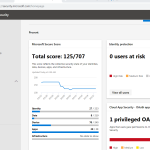 New Microsoft 365 security center and new compliance center