

In the world of cloud-native applications, microservices bring agility, scalability, and speed. But with this modular approach comes complexity: logging, monitoring, proxying, and configuration often become tricky. That’s where the Sidecar Pattern steps in — and Azure makes it easier than ever to implement.
🚀 What is the Sidecar Pattern?
Imagine riding a motorbike with a sidecar attached. The motorbike (your core microservice) does the heavy lifting, while the sidecar (a helper process) provides support without interfering with the rider’s focus.
In cloud-native terms:
- Microservice = Motorbike → Handles business logic.
- Sidecar = Support Process → Provides cross-cutting services like logging, monitoring, proxying, or configuration updates.
The beauty of this approach? Loose coupling. Your main service doesn’t need to know the details of how logging or security is implemented — the sidecar handles it.
🏗️ How It Works in Azure
Azure offers multiple ways to attach a sidecar to your microservices:
1. Azure Kubernetes Service (AKS)
In Kubernetes, the sidecar pattern is implemented by running containers in the same pod:
- Your main container: runs the microservice.
- Your sidecar container: runs the supporting process (e.g., logging agent, proxy).
Examples in AKS:
- Envoy/NGINX as a proxy sidecar for routing traffic.
- Fluent Bit or Logstash sidecar for capturing logs.
- Dapr sidecar for state management, secrets, and observability.
2. Azure Container Apps + Dapr
Azure Container Apps makes the sidecar pattern almost out-of-the-box.
- Each microservice can automatically get a Dapr sidecar, which provides service discovery, secure communication, and pub/sub messaging — without developers writing boilerplate code.
3. Azure Service Fabric
Service Fabric also supports sidecar-like deployments by running helper processes alongside core microservices within the same node.
⚙️ Real-World Use Cases
- Logging & Monitoring: A Fluent Bit sidecar collects logs and forwards them to Azure Monitor or Application Insights.
- Security Proxy: Envoy acts as a sidecar proxy, handling mTLS authentication for your microservices.
- Configuration Sync: A sidecar keeps configuration files in sync with Azure App Configuration or Key Vault.
- Resilience: Circuit breaking, retries, and rate limiting can be abstracted into a proxy sidecar.
🌟 Why Use the Sidecar Pattern?
✅ Separation of concerns — keep your business logic clean.
✅ Consistency — all services benefit from the same observability/security approach.
✅ Flexibility — upgrade the sidecar without touching the core microservice.
✅ Scalability — sidecars scale with their host services.
The Sidecar Pattern is a powerful architectural tool in microservice ecosystems, and Azure provides the building blocks (AKS, Container Apps with Dapr, Service Fabric) to implement it seamlessly. By “riding in tandem,” your microservices can stay lean and focused while sidecars handle the heavy-duty cross-cutting concerns.
Extra posts:
 API Gateway Pattern in Azure Managing APIs and Routing Requests to Microservices
  Follow the Thread Distributed Tracing Patterns for Microservices in Azure
  API Gateway Pattern in AWS Managing APIs and Routing Requests to Microservices
  Boosting Performance with the Materialized View Pattern in Azure
  Secret Store Pattern in Azure Using Secure Vaults for Credentials and Secrets
 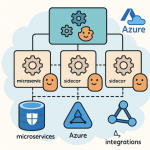 Service Mesh Architecture Pattern in Azure Handling Service-to-Service Communication, Security, and Observability