
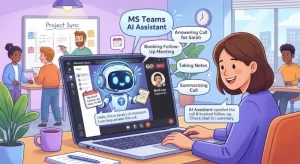
Microsoft Teams is preparing to introduce Intelligent Call Delegation, an AI-powered calling assistant designed to answer incoming calls, collect information from callers, and arrange follow-up appointments through Microsoft Bookings. According to the announcement associated with Microsoft 365 Roadmap ID 565216, the public preview is scheduled for mid-to-late November 2026, followed by general availability in January 2027.
The feature aims to address a familiar workplace problem: important calls often arrive when employees are already occupied with meetings, deadlines, or other conversations. By handling the initial interaction and gathering context, the AI assistant could help users decide which calls need immediate attention and which can wait for a more convenient time.
The rollout will apply worldwide, subject to the appropriate licensing and administrative configuration. For organizations that rely on Microsoft Teams Calling, the update signals a move toward more automated, context-aware call management.
What Is Microsoft Teams Intelligent Call Delegation?
Intelligent Call Delegation is an AI-powered calling feature that helps users manage incoming calls without having to respond personally to every caller at the moment a call arrives.
Rather than simply forwarding calls or sending unanswered calls to voicemail, the assistant is designed to interact with callers, gather context about their needs, and help users determine how to respond.
The planned capabilities include:
- AI-powered call answering: The assistant can answer incoming calls on a user’s behalf.
- Caller context gathering: It collects information that helps the user understand why someone is calling.
- Follow-up scheduling: Through Microsoft Bookings integration, it can arrange appointments to reconnect with callers later.
- Personalized configuration: Users can customize available settings, depending on the policies established by their organization’s administrators.
The feature is documented under Microsoft 365 Roadmap ID 565216. Its purpose is to make incoming calls easier to manage while helping employees protect time for focused work.
Why Microsoft Is Bringing AI Into Call Management
Phone and Teams calls remain essential to customer service, sales, consulting, recruitment, and internal collaboration. However, every incoming call creates a decision: answer immediately, interrupt another task, decline the call, or return it later.
That decision becomes more difficult for employees who spend much of their day in scheduled meetings or handling several requests at once. Missed calls can also create additional administrative work when employees must identify the caller’s needs and coordinate a suitable time to reconnect.
Intelligent Call Delegation is designed to reduce that friction by handling the initial interaction and gathering information before the employee steps in.
For example, a consultant in a client meeting might receive a call from a prospective customer. Instead of forcing an immediate interruption or leaving the caller without a useful next step, the AI assistant could gather the reason for the call and help arrange a follow-up appointment.
A sales representative could similarly benefit from having a caller’s purpose established before starting a conversation. An internal team member could spend less time managing routine scheduling requests.
These examples illustrate the potential value of the feature; actual outcomes will depend on configuration, licensing, and how the capability performs in practice.
Microsoft Teams and Bookings: How the Integration Could Work
One of the more practical elements of the announcement is the planned integration with Microsoft Bookings.
Bookings provides appointment-scheduling capabilities, allowing organizations and individuals to coordinate meetings around availability. Connecting that scheduling functionality to an AI calling assistant creates a more direct path from an incoming call to a planned follow-up.
The intended workflow is straightforward:
- A caller contacts a Teams user.
- Intelligent Call Delegation answers the call on the user’s behalf.
- The assistant gathers context about the caller’s request.
- If a conversation cannot happen immediately, the assistant can schedule a follow-up through Microsoft Bookings.
- The user can return to the conversation at a more suitable time.
This approach could be especially useful for professionals whose work involves frequent external calls and appointment coordination.
However, the roadmap announcement does not establish every detail of the eventual scheduling experience. Organizations should verify the supported configuration options, licensing requirements, and operational limits as Microsoft publishes further guidance.
Intelligent Call Delegation Rollout: November 2026 to January 2027
Microsoft’s announcement outlines a phased worldwide rollout, giving organizations an opportunity to evaluate the feature before its planned general release.
| Release stage | Expected timeline | Availability |
|---|---|---|
| Public Preview | Mid-to-late November 2026 | Worldwide |
| General Availability | January 2027 | Worldwide |
The public preview is expected to begin in mid-November and finish by late November 2026. General availability is scheduled to begin in January 2027, with the rollout expected to finish by late January.
These are planned dates rather than a guarantee that every eligible user will receive the feature simultaneously. Deployment timing can vary, and organizations should monitor the Microsoft 365 message center and official roadmap for updates.
For IT teams, the preview period offers a potential opportunity to assess the feature’s usefulness, identify configuration requirements, and prepare internal guidance before wider adoption.
Licensing and Administrator Requirements
Intelligent Call Delegation will not automatically become available to every Microsoft Teams user. According to the announcement, users must have the appropriate licensing provisioned before they can configure the feature.
Once eligible users are provisioned, configuration options are expected to appear under Teams Call Settings. The options available to each user may depend on administrator configuration.
Microsoft also plans to provide administrators with Personal attendant policies to configure Intelligent Call Delegation settings for users.
Before deployment, IT administrators should consider the following steps:
- Review licensing: Confirm which users qualify and determine the applicable licensing requirements.
- Assess user needs: Identify employees who receive frequent calls or regularly schedule follow-up conversations.
- Prepare policies: Review the available Personal attendant policies and determine how settings should be managed across the organization.
- Plan communications: Explain how the feature is intended to work and how employees should handle calls that require immediate personal attention.
- Evaluate during preview: Where eligible, test the feature with a limited group before considering broader deployment.
The announcement does not provide a complete licensing breakdown, so administrators should avoid assuming that an existing Teams subscription automatically includes access.
What the Update Could Mean for Productivity
The main benefit of Intelligent Call Delegation is not simply that an AI assistant can answer a call. Its potential value lies in reducing the work that surrounds each incoming interaction.
Employees often spend time switching between applications, checking availability, identifying caller intent, and coordinating appointments. An assistant that combines initial call handling with follow-up scheduling could reduce some of those steps.
Three areas stand out.
Fewer unnecessary interruptions. Employees may be able to remain focused on a meeting or complex task while the assistant handles the initial interaction.
More structured follow-ups. Connecting callers to an appointment workflow could help reduce the back-and-forth associated with finding a suitable time to talk.
Better preparation for conversations. Gathering the caller’s reason for reaching out can give employees useful context before they respond.
Still, the feature should not be treated as a guarantee that every call will be handled correctly or that productivity will automatically improve. Organizations will need to evaluate caller experience, scheduling accuracy, and the amount of manual follow-up that remains necessary.
Compliance, Privacy, and Operational Considerations
The supplied announcement identifies no specific compliance considerations for this rollout. That does not mean organizations can disregard their own privacy, security, and regulatory obligations.
AI-assisted calling may involve interactions with customers, employees, suppliers, or other external parties. Organizations should review how the feature fits existing policies for handling caller information and managing business communications.
Before enabling the capability at scale, administrators should clarify:
- What information the assistant collects and how it is used.
- Whether existing policies adequately cover AI-assisted interactions.
- Which users can configure the feature and what controls administrators retain.
- How scheduled follow-ups will be managed.
- What procedures employees should follow when the assistant cannot handle a request appropriately.
These are prudent deployment checks rather than reported compliance problems with the feature.
Organizations in regulated industries should also assess the functionality against their own legal and internal requirements instead of relying solely on the roadmap’s general compliance statement.
What Businesses Should Do Before the Rollout
With the public preview planned for November 2026 and general availability expected in January 2027, organizations have a relatively short window to prepare.
The most useful starting point is to identify where incoming calls create the greatest disruption. Customer-facing teams, consultants, sales professionals, and employees with heavily booked calendars may be good candidates for an initial evaluation.
IT leaders should then verify licensing, review administrative controls, and establish a small-scale testing plan. During the preview, they can assess whether the assistant gathers useful context, schedules appropriate follow-ups, and fits the organization’s expectations for caller experience.
It is also worth setting clear expectations for employees. AI-assisted call handling should support human judgment, not replace it in situations where personal attention, sensitive discussions, or urgent decisions are required.
Looking Ahead: AI Could Become a More Active Part of Everyday Calling
Microsoft Teams Intelligent Call Delegation reflects a broader shift in workplace software: AI is moving beyond generating content and answering questions toward performing practical tasks within existing workflows.
By combining call answering, context gathering, and appointment scheduling, Microsoft is positioning the assistant to handle more of the administrative work that surrounds business conversations.
The real test will come as organizations begin using the feature. Its impact will depend on how reliably it handles caller requests, how well the Bookings integration fits existing processes, and whether administrators can provide the right balance of automation and control.
For now, businesses should treat November 2026 as the planned preview milestone and January 2027 as the expected general-availability window. Monitoring official Microsoft updates and preparing licensing and policy decisions ahead of deployment will put organizations in a stronger position to evaluate the feature when access becomes available.
Extra posts:
 Microsoft Teams Is About to Get a Major Call History Upgrade Here’s What’s Changing
 Microsoft Teams Is Changing Call History for Multi-Line Users This October
 Microsoft Teams Is Getting Smarter: AI-Powered Call Recaps Arrive in Queues App This September
 Microsoft Teams Is Getting a Smarter Meeting Assistant: Facilitator Can Now Join Channel Meetings
 Microsoft Teams Call Quality Dashboard Gets a Major Refresh: New UI, Dark Mode and Better Accessibility Coming in 2026
 Microsoft Teams Tightens Meeting Privacy: Lobby Visibility Will Now Follow Admission Permissions