
In every organization, there’s a familiar divide: those who are fluent in technology and those who approach it with hesitation. The digital skills gap isn’t just a problem of access—it’s a problem of confidence. As tools become more sophisticated, employees who feel “left behind” can experience anxiety about automation, coding, and even basic data tasks.
But what if the same technology that once intimidated could now empower?
Enter Copilot—an AI-powered assistant that turns digital fear into functional capability.
From Intimidation to Empowerment
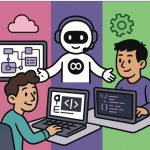
For years, upskilling has meant long training sessions, steep learning curves, and a fair amount of frustration. Copilot changes that dynamic entirely. Instead of forcing employees to learn every technical nuance of a tool, Copilot acts as a bridge, providing real-time explanations, suggestions, and support.
- In Excel: A non-technical user who once dreaded formulas can now simply describe what they want—“show me the total sales by region excluding refunds”—and Copilot will create the right formula instantly. This transforms spreadsheets from confusing grids into approachable problem-solving tools.
- In Code: A marketer maintaining a landing page doesn’t need to master JavaScript overnight. With Copilot, they can ask for help rewriting or debugging a code snippet, learning as they go. The AI not only fixes the issue but also explains why it works—building confidence over time.
- In Documents: When legal, policy, or financial language feels overwhelming, Copilot can summarize or translate complex documents into plain English. Suddenly, information that once felt off-limits becomes accessible to everyone, not just specialists.
Inclusivity Through Immediate Upskilling
Digital transformation often leaves less technical staff feeling sidelined. Copilot changes that by making digital participation inclusive. It doesn’t replace training—it accelerates it. Employees can explore new tools without fear of “breaking something,” and they receive just-in-time guidance tailored to their context.
The result?
- Increased confidence among employees who once avoided digital tasks.
- Cross-functional collaboration as non-technical teams engage more meaningfully with data and code.
- Reduced bottlenecks since fewer tasks require escalation to technical experts.
When everyone can participate in the digital conversation, innovation spreads faster and deeper.
From Fear to Function—In Real Time
The beauty of Copilot lies in its immediacy. It meets employees where they are—whether that’s a Word document, a Power BI dashboard, or a GitHub repository—and elevates their capability on the spot.
No manuals. No intimidation. Just empowerment.
In this way, Copilot doesn’t just automate work; it amplifies human potential. It’s the co-worker who never judges, the mentor who’s always available, and the safety net that encourages experimentation.
The Future of Skills Development
As organizations embrace AI-assisted workflows, the definition of “digital skills” will evolve. It’s no longer about memorizing commands or coding from scratch—it’s about knowing how to collaborate with intelligent tools.
By introducing Copilot as a partner in learning, companies can turn digital apprehension into digital confidence. Every employee—from finance to HR to marketing—can go from asking “Can I do this?” to declaring “I’ve got this.”
In short: Copilot isn’t just an AI assistant—it’s a catalyst for inclusion, capability, and growth. By moving your workforce from fear to function, you unlock the true power of digital transformation: empowering people to do more, understand more, and believe more in their own potential.
Extra posts:
 Best Learning Paths to Master Copilot Skills
  The ‘Digital Twin’ Employee Creating Hyper-Personalized Copilot Prompts with Copilot Studio
  Empowering the Workforce How to Configure and Use the Copilot Employee Self-Service Agent in Microsoft 365
  Understanding the GitHub Copilot Exam Blueprint Skills Measured & Topics Covered
  Low-Code vs Pro-Code How Copilot Studio Bridges the Gap
  Comparing Copilot in Microsoft 365 vs. GitHub Copilot: Key Differences